
When designing a fishing lure, it is essential to focus on the target fish. Consider factors such as the fish’s habits, average size, environment, preferred bait fish, mouth size, and the depth at which it swims. Once the size and shape of the lure are determined, the next step is to calculate its buoyancy.
To begin this, some informations are needed:
|
Material |
Density (g/cm3) |
|
Balsa |
0.11 – 0.14 |
|
Pine |
0.35 – 0.85 |
|
Cedar |
0.37 – 0.58 |
|
Spruce |
0.40 – 0.71 |
|
Oak |
0.59 – 0.90 |
|
Freshwater |
1 |
|
Seawater |
1.02 – 1.03 |
|
ABS |
1.04 – 1.16 |
|
ASA |
1.00 – 1.24 (avg 1.07) |
|
ABS-like resin |
1.10 – 1.20 |
According to this table, all types of wood will naturally float and while all types of hard plastic are naturally sinking materials if they are not hollow.
Take my design’s profile as an example, it is intended to be made of ABS-like resin(roughly 1.17 g/cm3).
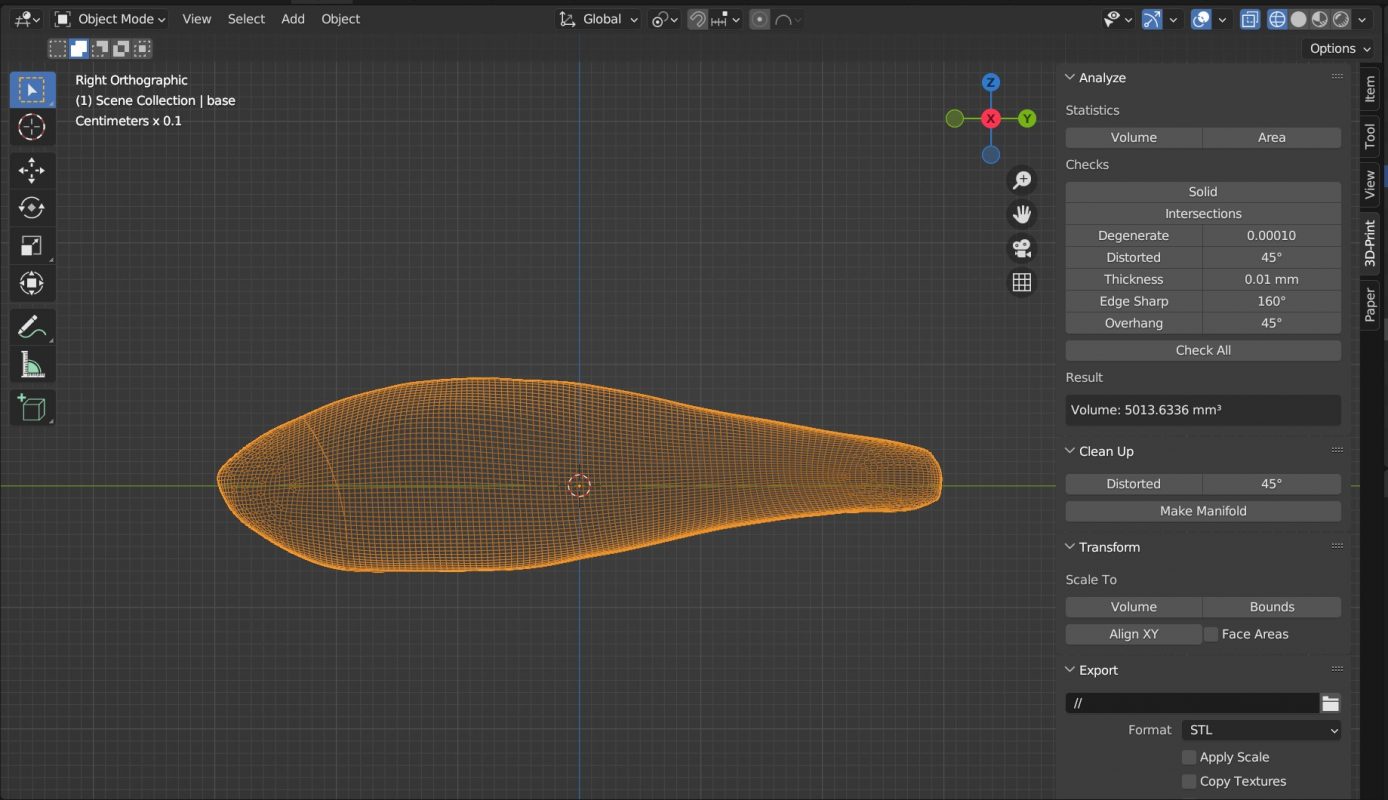 Which is 5.0136 cm3 and 5.866g when it is solid. In order to make it float in freshwater, 0.8524g worth of material has to be removed from inside(not outside, which is pointless. lol)
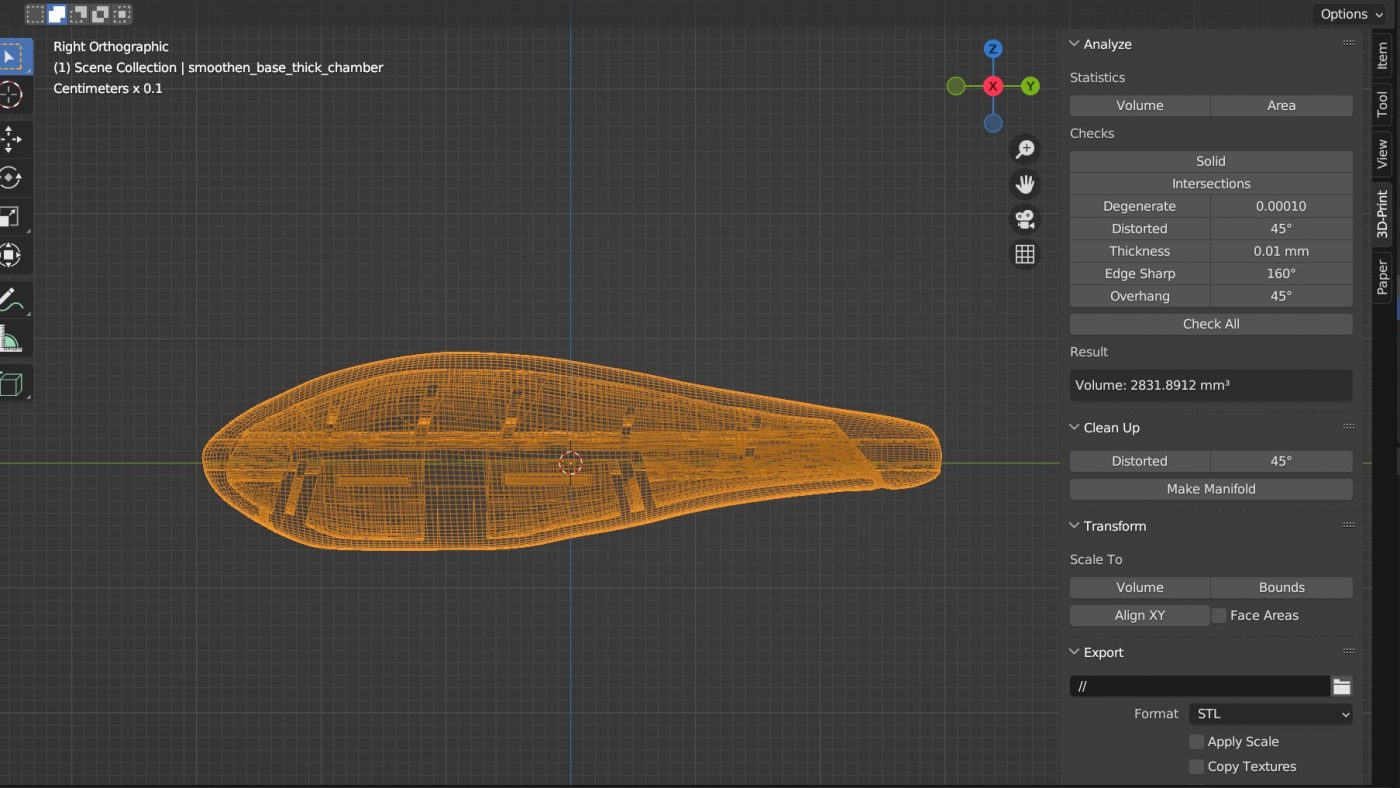 After introducing air chamber and interior structure, its volume reduced to 2.832 cm3 and 3.313g.
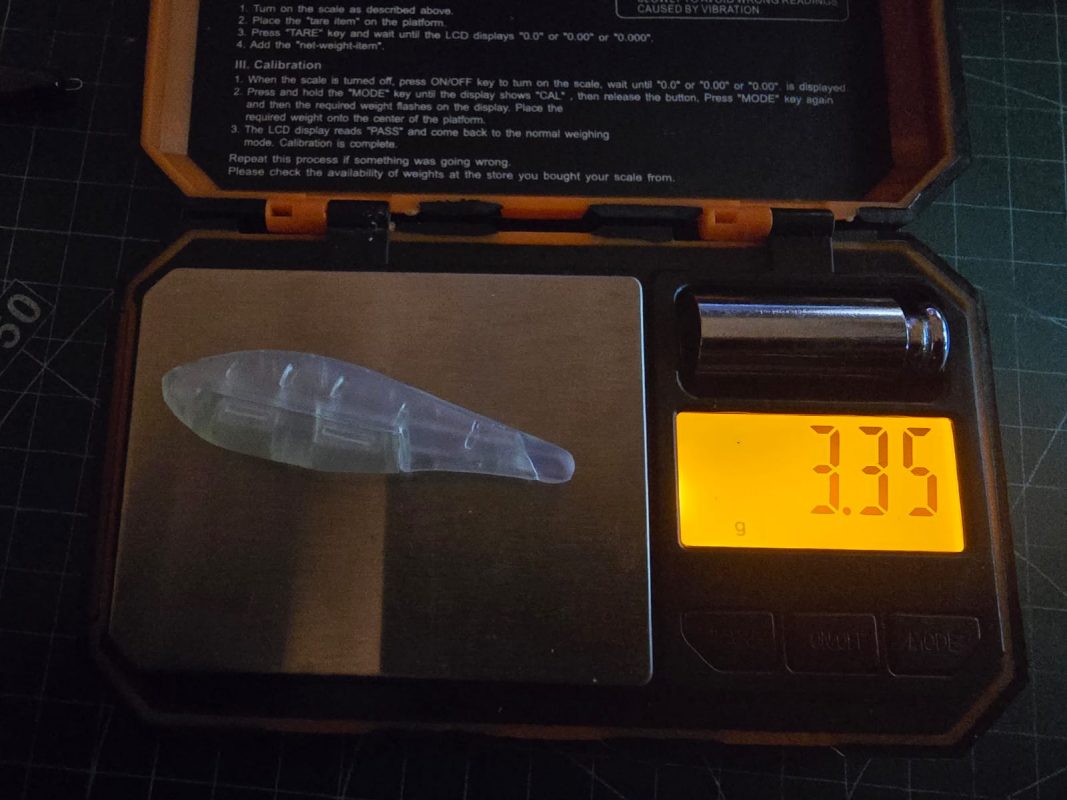
Actual dry weight is 3.35g.
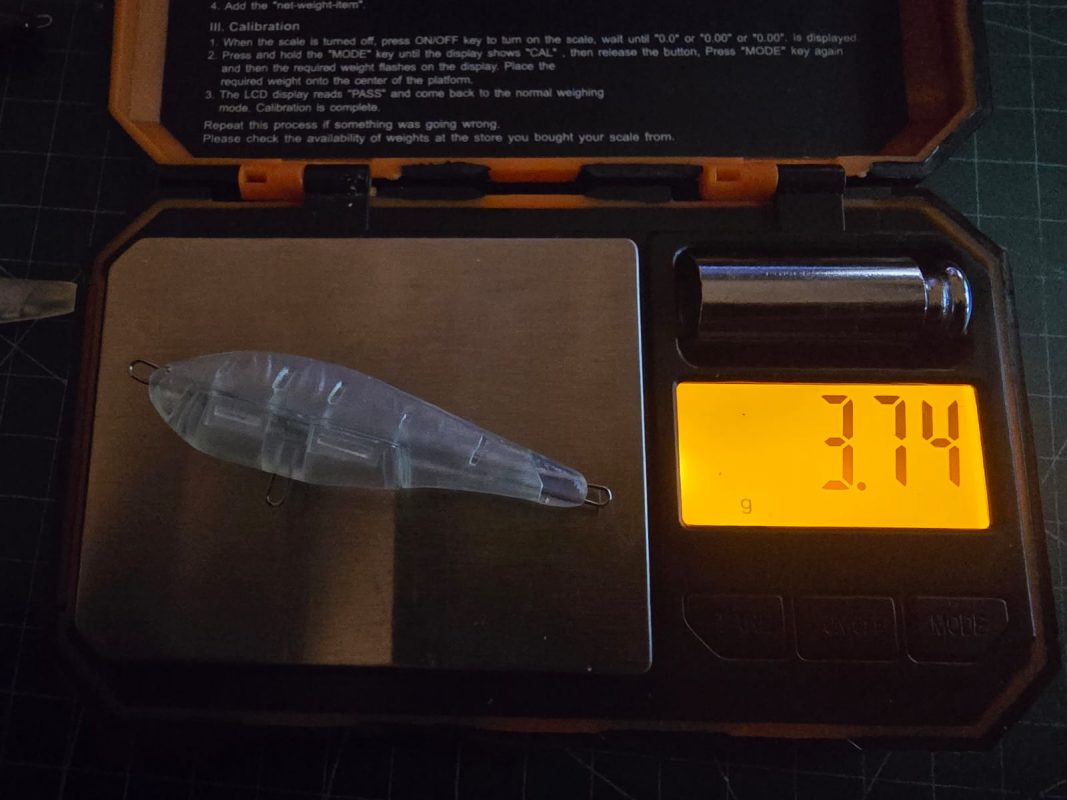
3.74g if spring wire is installed.
And since this lure will only start sinking when reaching 5.0136g in freshwater, it leaves 1.274g for hooks/lead weight/coating.
Some materials are naturally lighter than water, however, it is always a good practice to further reduce its weight and use lead/ball bearings as loading later on. It is because of the lower centre of weight is, the faster it resumes to stable status after every action.
SOme unnecessary calculations
To calculate acceleration:
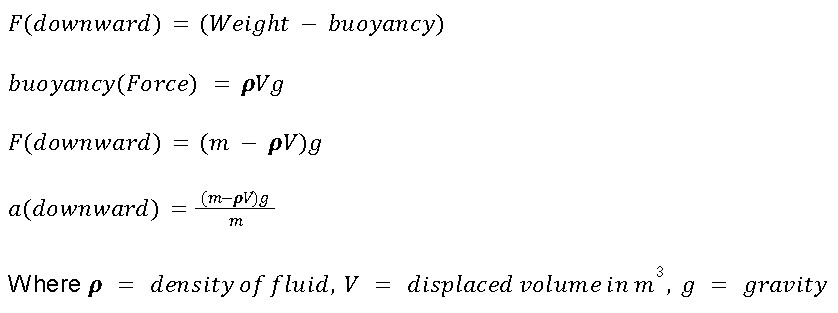
Assuming lead weight = 2.04g, sum of hooks weight = 0.5g, coating weight = 0.3g.Total weight = 6.59g
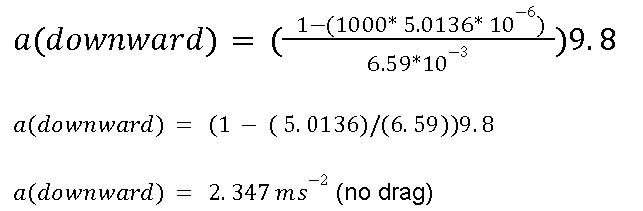
Sinking acceleration:
Drag:

Terminal velocity:
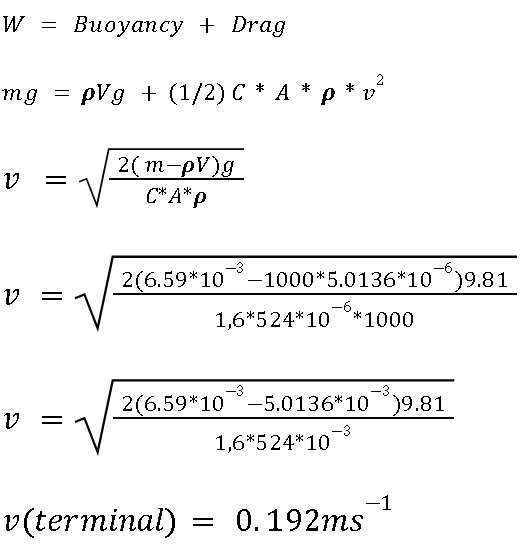
This calculation shows its final sinking rate is 0.192m/s, it should be reached very fast if considering acceleration(no drag) is 2.347.
Many lure makers find it challenging to create suspending lures due to the precise buoyancy calibration required. Calculations indicate that drag affects both the sinking rate and acceleration. Therefore, it is advisable to consider this factor when designing a suspending fishing lure. Increasing the x-y cross-sectional area (on its lip) may be more viable after making the lure body slightly lighter/heavier than water.
