
A fishing rod comprises three main components: the grip (handle), the blank (body), and the guide rings.
Grip
If the reel seat features a trigger‑style thumb rest, it’s designed for a baitcasting setup; without that trigger, it’s meant for a spinning reel. Grip materials range from wood and cork to EVA foam. Cork and EVA offer comparable comfort and performance, though cork handles benefit from occasional cleaning with bleach or a mild cleaner to keep them fresh.
Reel seat
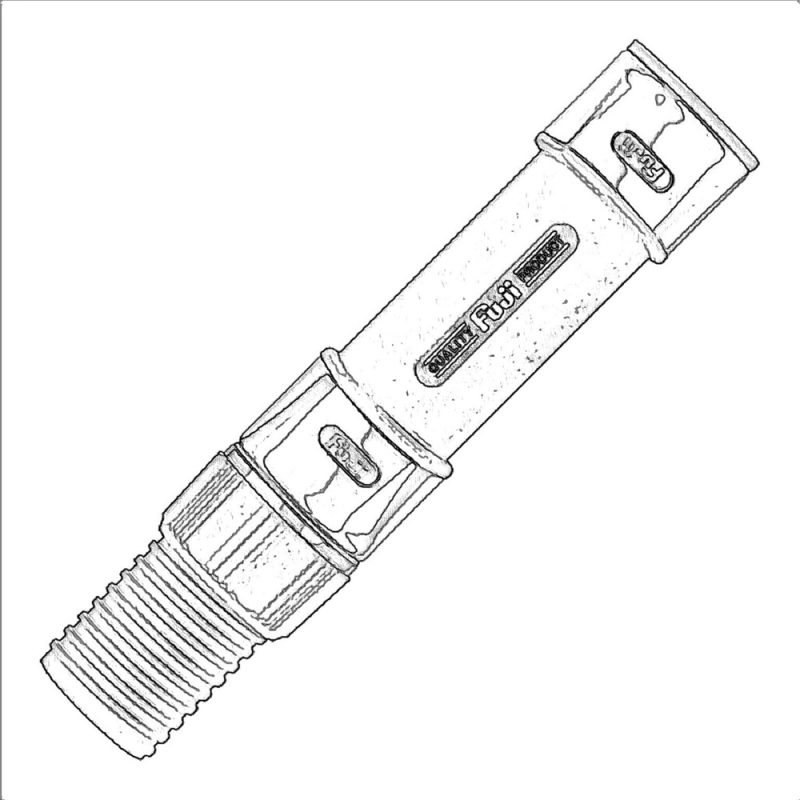
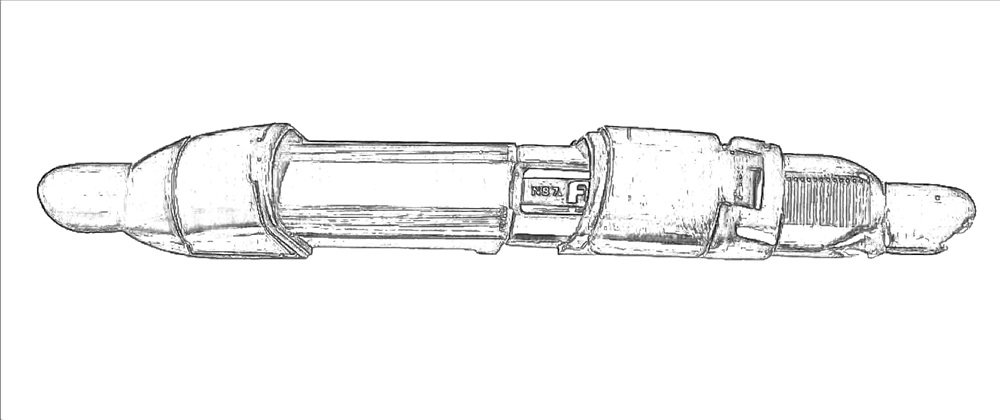
There are two primary reel‑seat styles: plate seats and screw‑type seats.
Screw‑type seats are built as a single unit, with the blank passing through the underside of the reel‑seat body. They’re common on modern rods and heavy‑duty designs, but their bonded components can sometimes loosen if the adhesive degrades.
Plate seats consist of a thin metal or graphite band glued and wrapped by thread around the blank. You’ll often find them on older rods and ultralight gear; they’re simple and lightweight but rely entirely on that glue and wrap for security.Personally, I will choose screw-type for lure fishing.
Rod guides
Fuji’s guides are the industry standard—here’s a super‑concise breakdown:
-
Frame Styles
-
Single‑foot: Light, for sensitive/light‑power rods
-
Double‑foot: Stronger, for medium‑to‑heavy power rods
-
Long‑foot (spinning rods): Better for the wide, looping line from spinning reels
-
Short‑foot (baitcasting rods): Low‑profile, matching the straight line exit
-
-
Ring Inserts
-
Silicon Carbide (SiC): Proven smoothness, durability, heat resistance
-
Torzite: Fuji’s newer, lighter, ultra‑smooth alternative to SiC
-
-
Saltwater Use
-
Opt for titanium‑framed guides to resist corrosion without extra bulk.
-
Blank
The two main materials for rod building are fiberglass and carbon fiber. For lure fishing, choose carbon fibre rod.
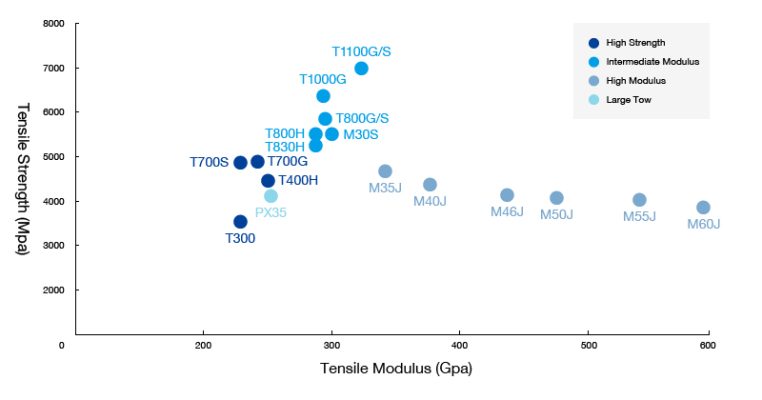
The chart above plots tensile strength against tensile modulus for Toray’s composite materials (Toray being one of the top five global carbon‑fiber suppliers). When rod makers specify which Toray grade they’ve used, you can refer to this graph to understand that material’s performance characteristics.
Action
By using different composite, manufactorers are manage to make rods provide different actions.
In general: There are Fast, Medium, and Slow. (Some companies also make Ultra fast and Ultra slow)
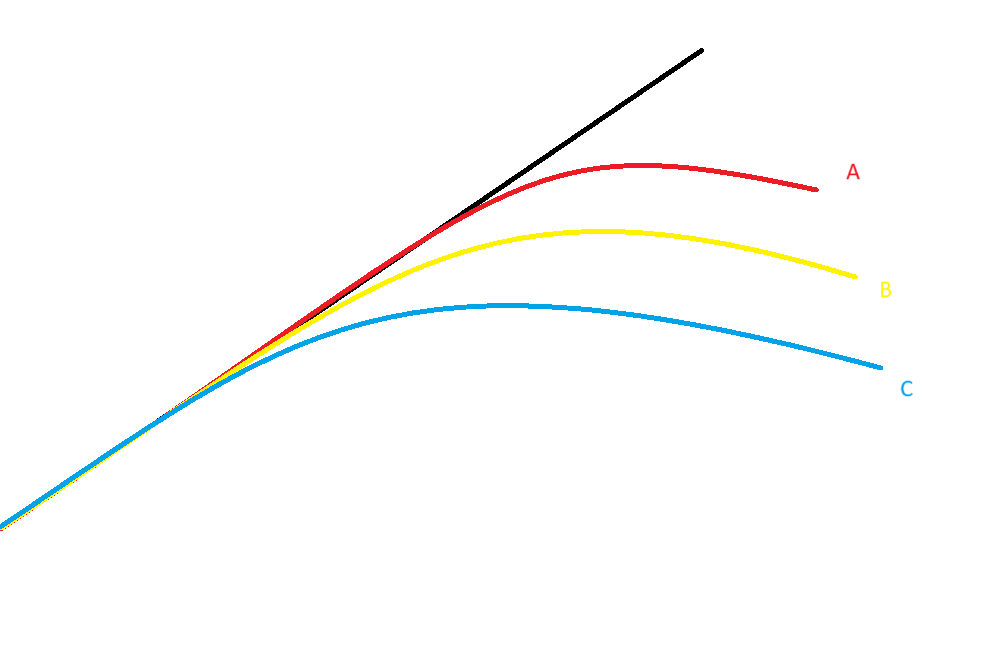
The digram above has shown A(Ultra-fast/Fast), B(Fast/Medium) and C(Medium/Slow). Every manufactorers comes with their own standards but it should gives you an idea how it should looks like.
The term ‘speed’ in rod action denotes the length of the blank that flexes before reaching its pivot zone—fast‑action rods bend only a limited section, while slow‑action rods allow more of the blank to curve.
Common misunderstanding
- Power and action
Some people might confuse rod power with action, but they are not the same. A rod can have a slow action—bending deeply into a wide C-shape—while still possessing high lifting power. For instance, many boat fishing rods are designed to flex significantly yet handle fish over 10kg without breaking. - Way to use
It should be noted that the tangent (turning point) on the load–deflection curve marks the rod’s pivot zone. If the blank never flexes around this engineered action point, the full strength profile remains unengaged, and the tip may fail well below the rod’s rated maximum load. (i.e.: NEVER let the angle between line and rod become too sharp.)
This also explains why rod breakages often occur when hauling a fish onto the shore rather than during the main fight—failures at that stage typically result from the tip bearing excessive load instead of flexing around its pivot, although true overloads can cause snaps but it should behind the pivot zone/closer to the handle.
How to choose
- Length
In general, a rod under 7 feet is better for freshwater fishing for easier control. while 10 feet for rockmark fishing as it gains casting distance and further reach from rocks.(less likely to stand on wet spot.) - Number of sections
There are two common fishing rod designs: telescopic and multi-piece. Telescopic rods are ideal for static fishing styles. Due to their collapsible design, they usually offer less casting distance and raw power, but they tend to be more sensitive and convenient for transport.
Multi-piece rods, in contrast, generally deliver better performance when fighting fish, especially under sudden pressure. Importantly, the fewer the rod sections, the more natural the bend and the greater the power transfer. While travel rods are great for portability, it’s best to keep expectations realistic—they often involve some trade-offs in casting performance and strength.
- Rod actions and purpose
For plugs like minnows, pencils, poppers, crankbaits, vibers, and shads, a medium to fast action rod is ideal. These rods provide the responsiveness needed to perform twitching and jerking techniques effectively, allowing the lure to move as intended.
When it comes to metal jigs, a slow action rod is generally preferred—especially for vertical jigging—because the large, repetitive movements are less tiring and better supported by a more flexible rod. For shore jigging, a medium action rod strikes a good balance between casting performance and jig control, while avoiding the fatigue that fast action rods can cause during long sessions.
( Quick reminder: don’t test a rod by yourself by bending it into a C‑shape—this method won’t accurately reflect a fast‑action rod’s performance and could damage it. find someone assist you and check the curvature change near the turning point(Tangent).)
