
Safety Considerations for Resin Printing
Although the resin printing community is well aware of the dangers associated with resin, I would like to share some of my experiences. Unlike FDM printing, it is highly recommended to follow a strict workflow and protocol when dealing with resin.
Direct Contact
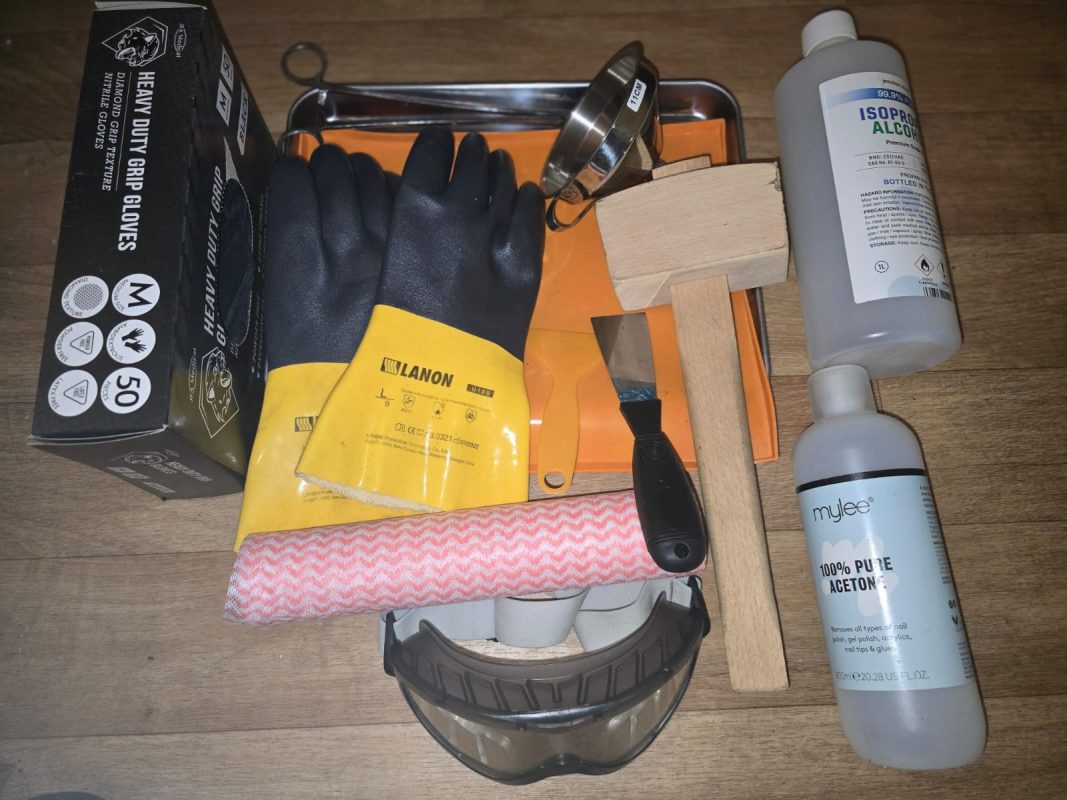
The image above shows all the necessary equipment:
-
Metal trays x 3
-
Silicone trays x 3
-
Long surgical pliers x 1
-
Metal scraper x 1
-
Plastic scraper x 1
-
Wooden hammer x 1
-
Metal funnel x 1
-
Pair of chemical-resistant gloves x 1
-
Box of nitrile gloves x 1
-
Roll of disposable cloth towels x 1
-
Isopropyl alcohol (IPA) x 1
-
Acetone x 1
-
Mask x 1
-
Pair of matching organic vapor filter cartridges x 1
-
Goggles x 1
Metal Trays & Silicone Trays: Since resin does not bond with silicone trays, it is good practice to place all your tools on them after use. Use one tray for dirty tools, one for clean tools after washing, and one for print handling before or after washing.
Long Surgical Pliers: When a print falls off the bracket or build plate during washing, it is advisable to use pliers to reach down. Otherwise, you will need to submerge your entire hand into resin-fused IPA.
Metal Scraper & Wooden Hammer: Sometimes the base of the print will stick too hard to be removed by just pulling it, and you will need to knock it off the build plate. Perform this task on a metal or silicone tray.
Plastic Scraper: To remove a failed print from the resin tank, it is recommended to gently push from the bottom of the printing film and then scoop it out with a plastic scraper.
Metal Funnel: After a failed print, residues are left in the tank. Sometimes you can only drain the resin back into its bottle before cleaning it.
Chemical-Resistant Gloves: Resin can penetrate our skin and normal surgical gloves, accumulating within our bodies. Always wear a pair of chemical-resistant gloves to prevent this. Choose reusable gloves to reduce the use of disposable ones.
Nitrile Gloves: These are for spare use in case of accidents (e.g., spilling resin). You will want a pair of clean gloves for cleaning without contaminating your surroundings. DO NOT USE LATEX gloves, as they can be penetrated by resin via diffusion.
Disposable Cloth Towels: These do not break easily when using IPA or acetone, unlike paper towels.
IPA: A bottle of uncontaminated IPA is useful for cleaning any resin spills on your surroundings or skin.
Acetone: Due to the additives in ABS-like resin and other engineering resins, IPA isn’t as effective for cleaning your tools. Acetone is your last resort for cleaning them.
Mask & Organic Vapor Cartridges: The mask is prepared for handling IPA and other solvents. Pouring IPA into the washing bucket will turn a considerable amount of IPA into vapor form. The vapor will accumulate in the empty space within the bucket, causing severe headaches and other issues.
Goggles: When resin lands on your hands, you can rub it off with IPA and dishwashing soap. However, if it lands in your eyes, it can be much more problematic. Always wear goggles!
By following these guidelines, you can avoid direct contact with resin. The next step is to develop your own standard workflow to maintain safety.
HVOC
A grow tent and inline ventilation fan will help keep HVOCs away. You may also add an activated carbon filter in between (find one designed for aquarium use).
Please take a look on Blog post 4) Safety first(FDM)
If you intend to print intensively for a long period, a HVOC/air quality metre will also be a nice equipment to have.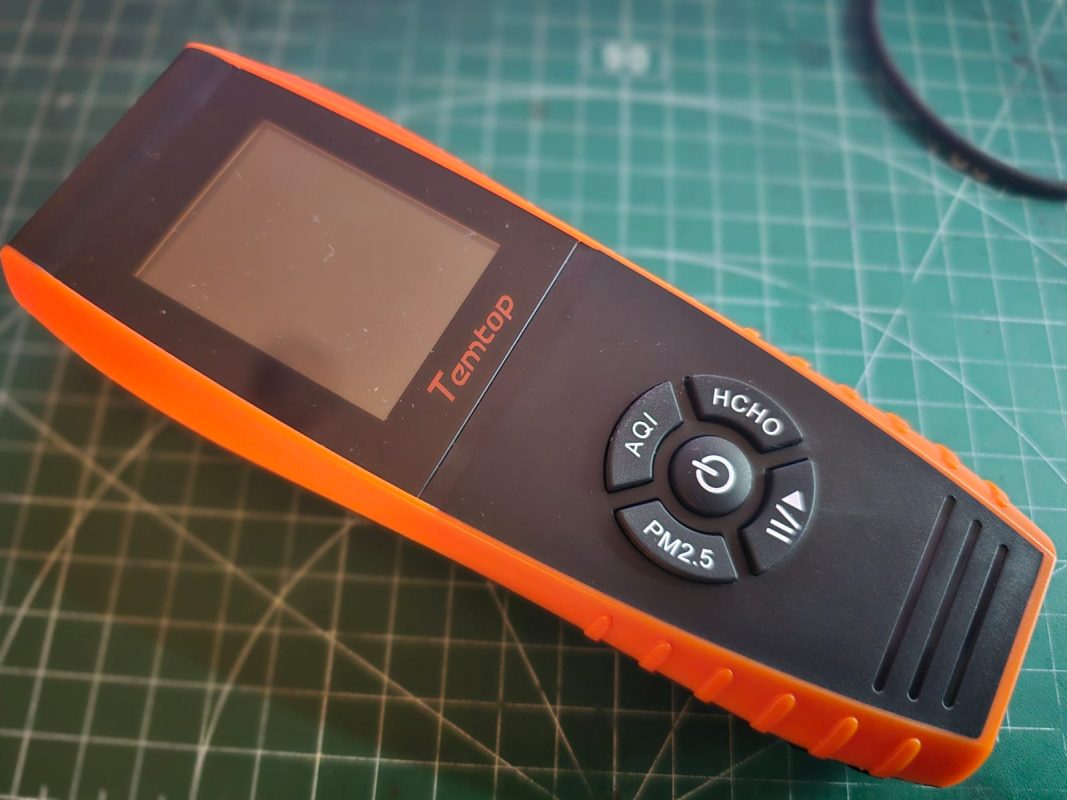
(Note: If anyone think all these safety meausres are being too cautious, please keep the opinion to yourself.)
Also, NEVER pour your resin into the sink or toilet. Which may potentially threaten the local environment (including water-washable type). There are several ways to recycle IPA but none of them are safe to perform at home, seek help from local authorities or private waste companies to see if they provide waste collection service. (Most of them do it for free or for a small fee, eg: UK local council).
