
Chrome
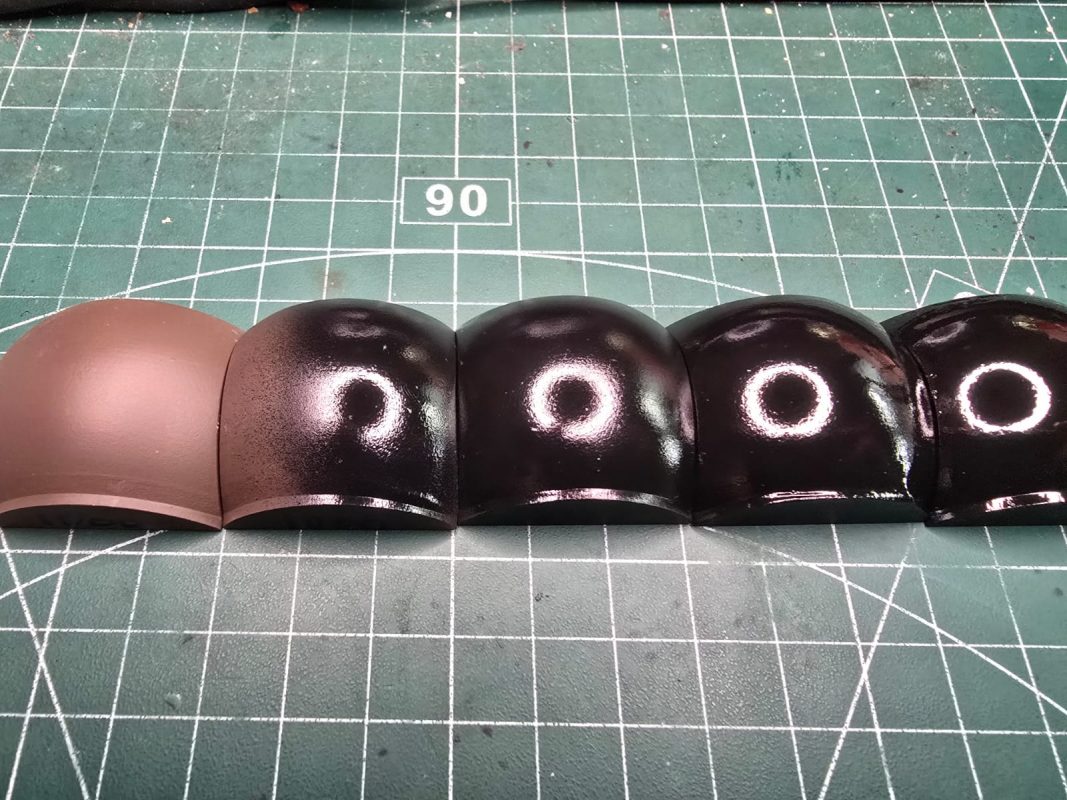 The image above illustrates how variations in paint thickness can impact the final finish, even when the underlying primer provides a consistent grit level. Applying multiple layers and completing the process with a slower airbrushing pass helps achieve a smoother surface. (from left to right: 1,2,3,4,5)
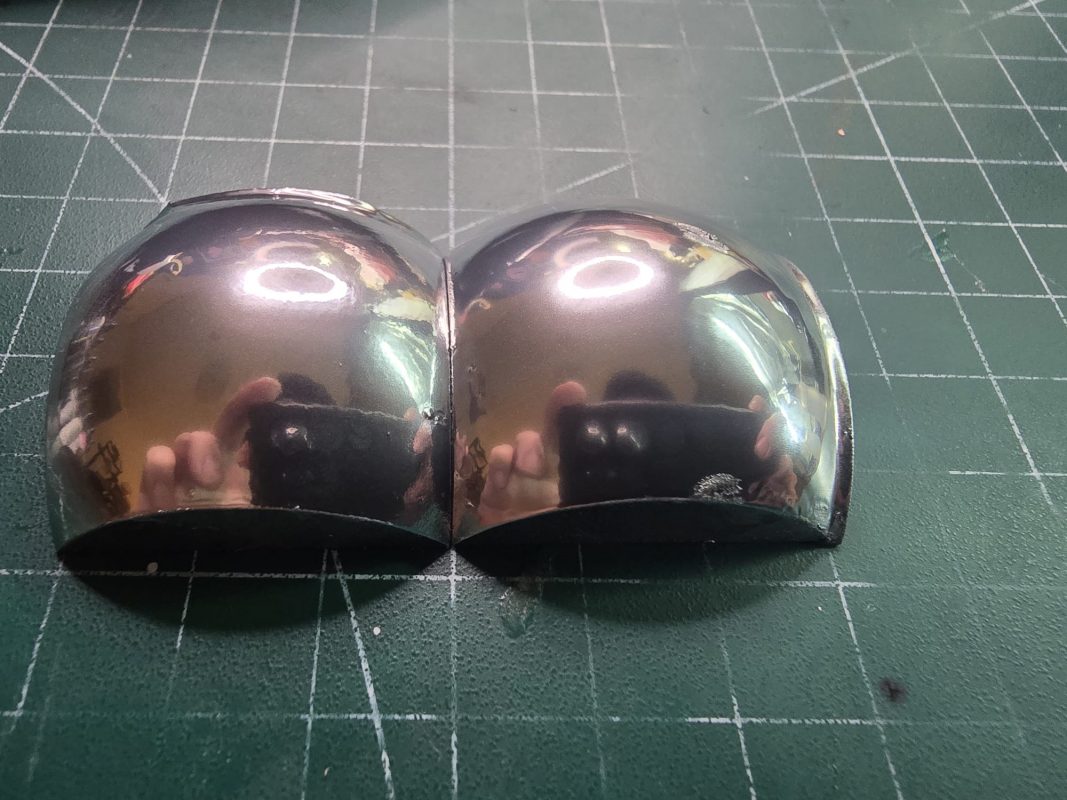
-
The direction of airbrush
-
Distance between nozzle and surface
-
Airbrush moving speed
- Air pressure (Ideally 40+ psi.)
Note: Allowing the paint to run out while continuing to spray air onto the surface can disrupt the finish, potentially causing blurring or unevenness.
Colour-Shift
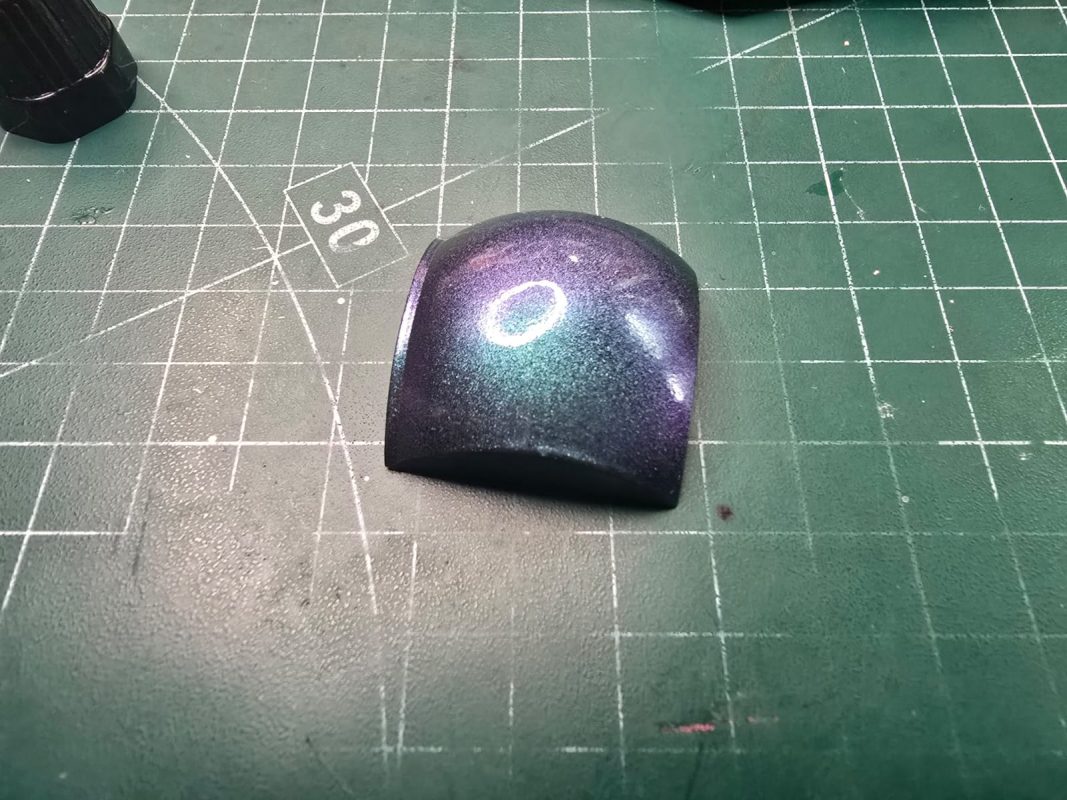
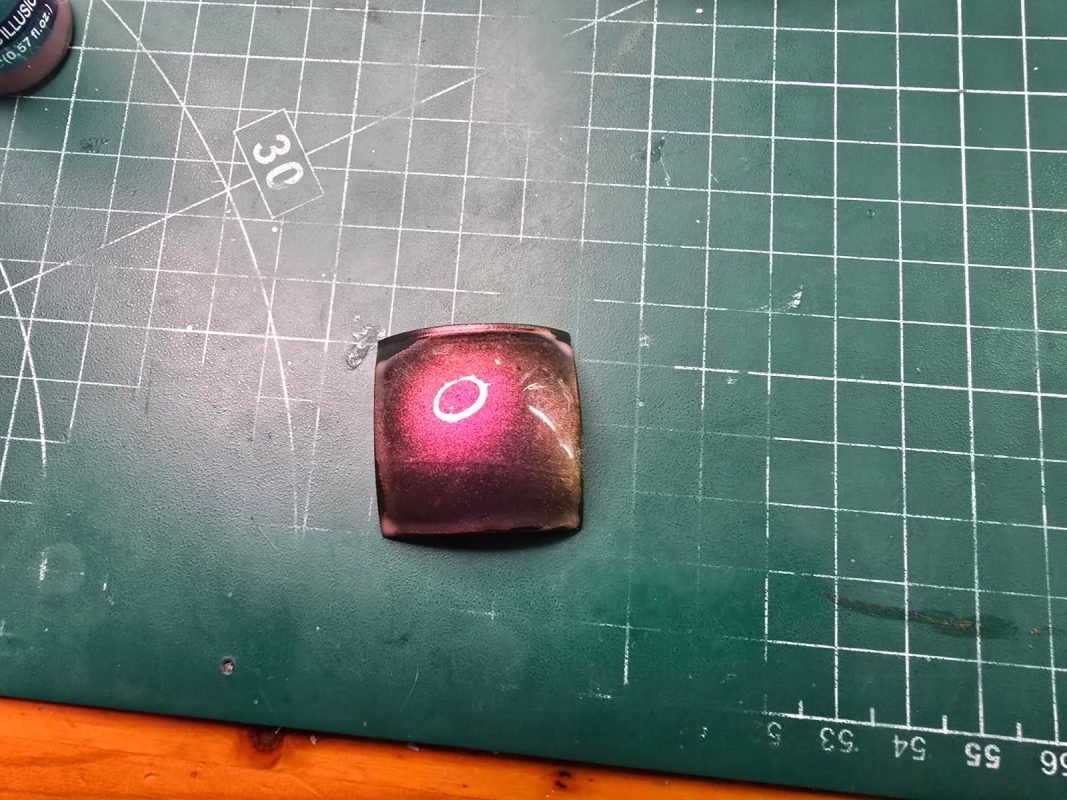
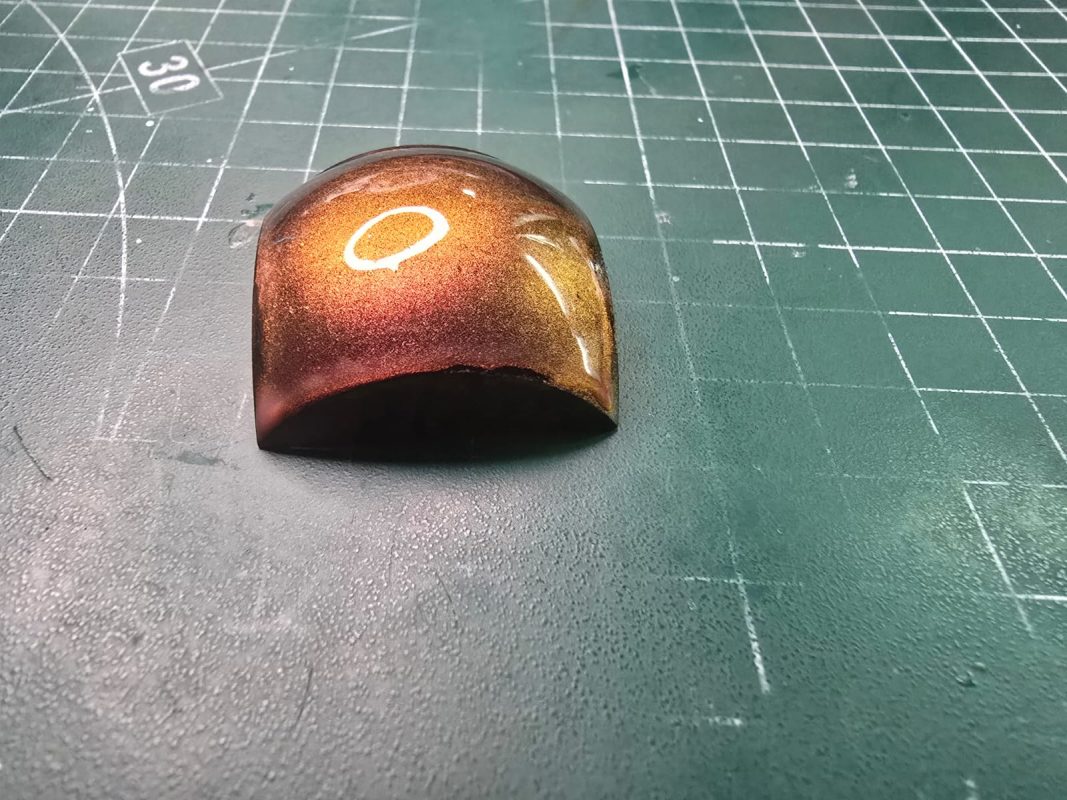
Color-shifting paints are available in both lacquer and acrylic paints under various names (e.g., “Mr. Crystal Color” by Mr. Hobby).
The underlying base color remains visible from certain angles, significantly influencing the final appearance.
Note: The green/blue combination provides a more pronounced contrast, while blue/purple and gold/red combinations produce subtler effects.
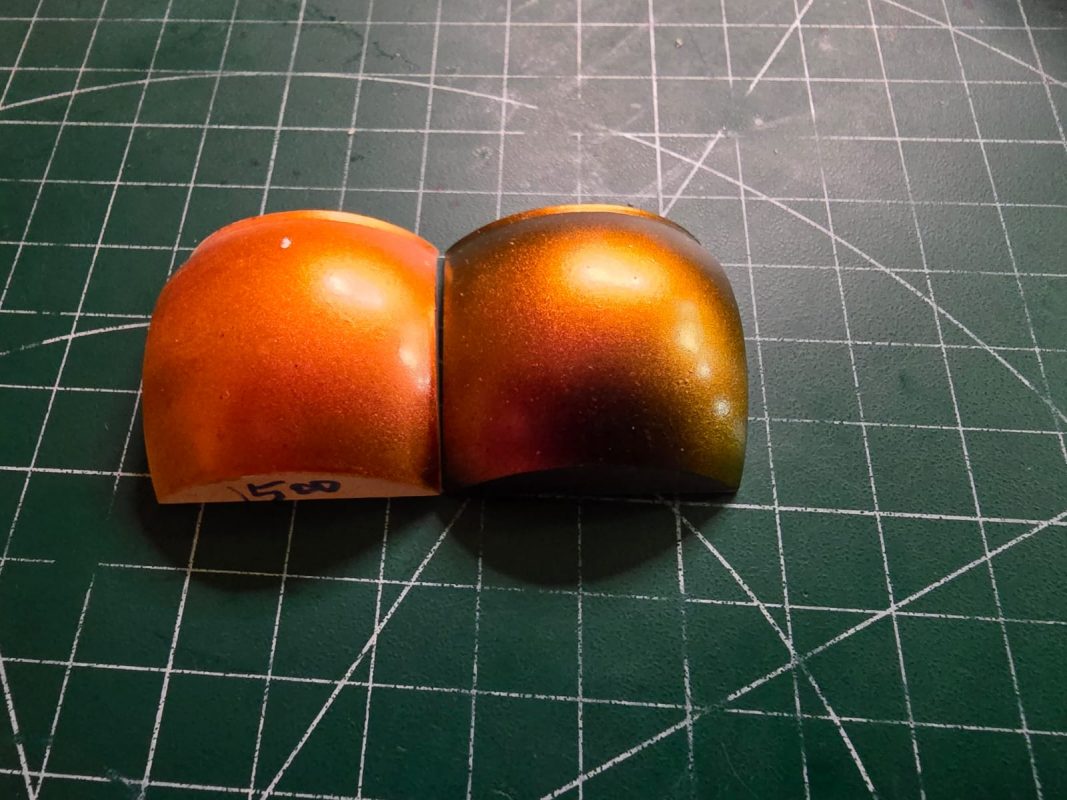
The underlying colour of left is white, while the underlying colour of right is black.
In general, both colour shift and chrome perform better on a glossy black surface.
Fluorescent
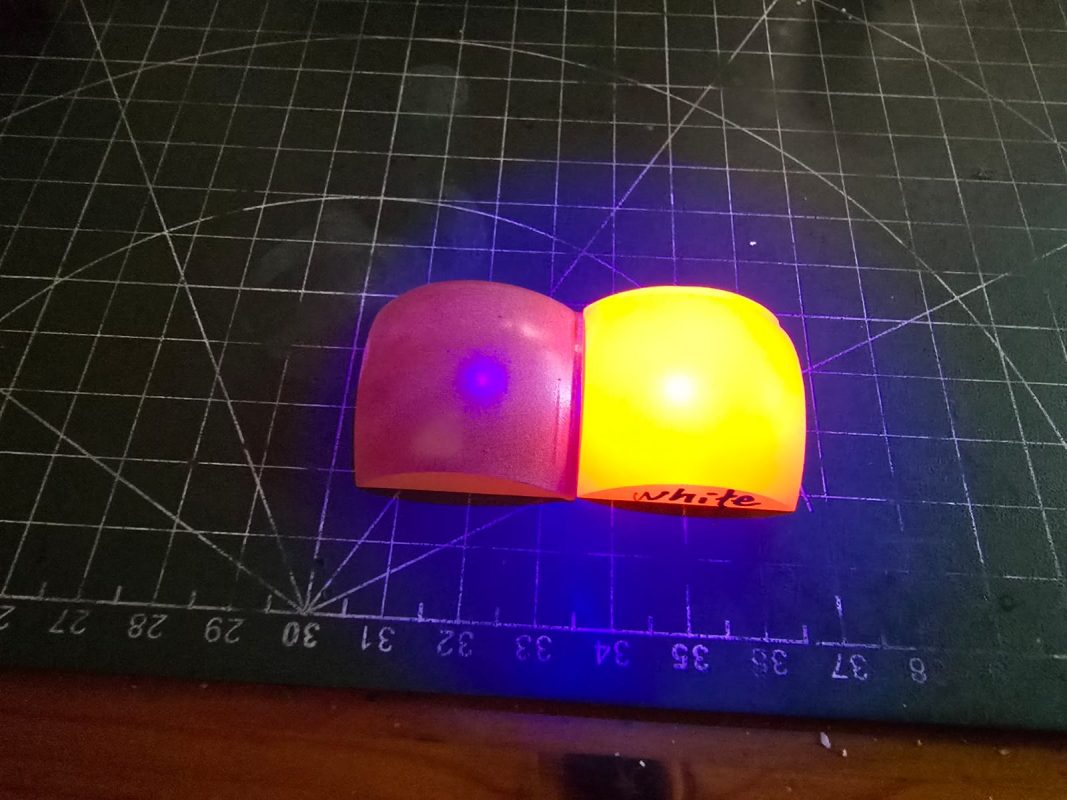
The picture on above shows how fluoescent colour perform. The mechanisms of fluorescence and phosphorescence are quite similar, as both involve the absorption of UV light and its conversion into visible light. The key difference lies in the duration of the visible light emission. In general, the intensity of light is much stronger from fluoescent, but it fades immdiately without UV.
